
Pneumonia Homeopathy Treatment in Chennai
- Dr Sheela Homeopathy Clinic Chennai
- Apr 9, 2025
- 6 min read

#pneumoniahomeopathy #pneumoniahomeopathyclinic #pneumoniahomeopathytreatment #pneumoniahomeopathydoctorinchennai #pneumoniahomeopathicclinicinchennai #pneumoniahomeopathictreatmentinchennai #pneumoniahomeopathyclinicintambaram
Pneumonia Homeopathy Clinic in Chennai
Pneumonia Homeopathy Treatment in Chennai - Dr. Sheela Homeopathic Healthcare Clinic
Pneumonia is a serious respiratory condition that causes inflammation in the lungs, leading to symptoms like cough, fever, chest pain, and difficulty breathing. It can be caused by bacteria, viruses, fungi, or inhaled irritants, and can range from mild to life-threatening.
At Dr. Sheela Homeopathic Healthcare Clinic, led by Dr. Sheela, who has over 20 years of experience, we offer effective pneumonia homeopathy treatment in Chennai. Dr. Sheela has successfully treated hundreds of pneumonia cases with a holistic approach, helping patients achieve lasting recovery without the need for harsh antibiotics.
Our Clinic’s Accessibility
Our clinic is conveniently located and easily accessible from a wide range of areas in Chennai. In fact, patients from all the following areas have been receiving treatment from us for various conditions, including pneumonia, with great success:
Adambakkam, Adyar, Anakaputhur, Anna Nagar, Ashok Nagar, Besant Nagar, Camp Road, Chengalpet, Chromepet, Egmore, Guduvancheri, Guindy, Kelambakkam, Kodambakkam, Kovilambakkam, Kundrathur, Madambakkam, Madipakkam, Manapakkam, Maraimalai Nagar, Medavakkam, Nanganallur, Nanmangalam, Navallur, Nungambakkam, Pallavaram, Palavakkam, Pallikaranai, Pammal, Perumbakkam, Perungalathur, Perungudi, Poonamallee, Porur, Rajakilpakkam, Saidapet, Selaiyur, Sembakkam, Shenoy Nagar, Sholinganallur, Siruseri, T.Nagar, Tambaram, Tharamani, Thiruporur, Thiruninravur, Thirukalukundram, Thoraipakkam, Vandalur, Velachery, Vengadamangalam, West Mambalam.
Patients from these locations have found our clinic to be easily accessible, with no hassle in reaching us. Whether you're coming from Adyar, Velachery, Tambaram, Porur, or any other area, you can rely on the convenience of our clinic's location and our expertise in homeopathic care.
Why Choose Us?
Expert Care: Dr. Sheela has over 20 years of experience and has successfully treated numerous cases of pneumonia and other conditions.
Holistic Approach: Our homeopathic treatment addresses the root cause of pneumonia, ensuring natural healing without side effects.
Wide Reach: We have been successfully treating patients from all parts of Chennai, including T.Nagar, Velachery, Tambaram, Sholinganallur, Porur, and beyond.
Patients from Kundrathur, Saidapet, Adyar, Pammal, Perungalathur, and many other areas have already benefited from our effective treatments. You can easily access our clinic without the worry of long drives or inconvenience.
Contact Us
To schedule a consultation, call Dr. Sheela at 9500049892. We are here to help you recover from pneumonia with safe, effective homeopathic treatments, whether you're in Nungambakkam, Medavakkam, Kodambakkam, or Velachery. Join our list of satisfied patients who have already found relief with our homeopathic treatment.
Pneumonia is a common yet potentially serious respiratory condition that affects millions of people globally each year. It is characterized by the inflammation of the air sacs in one or both lungs, which can fill with fluid or pus. It can vary from mild to life-threatening and is especially dangerous for certain groups of people, including young children, the elderly, and those with weakened immune systems.

What is Pneumonia?
Pneumonia is an infection that inflames the air sacs in one or both lungs, which are also known as alveoli. These air sacs may fill with fluid or pus, making it difficult to breathe. When the lungs are inflamed, it affects the body's ability to oxygenate blood properly, which can lead to serious health complications.
Pneumonia can be caused by a variety of pathogens, including bacteria, viruses, fungi, and even certain chemicals or inhaled foreign substances. The severity of the illness can depend on the type of pathogen involved, the person’s age, general health, and how quickly treatment is administered.
Types of Pneumonia
There are different types of pneumonia based on the pathogen that causes the infection and where the infection was contracted. These include:
1. Bacterial Pneumonia
This is one of the most common types of pneumonia. The Streptococcus pneumoniae bacteria are the leading cause, but other bacteria like Haemophilus influenzae and Mycoplasma pneumoniae can also cause bacterial pneumonia. It is often more severe than viral pneumonia and requires antibiotics for treatment.
2. Viral Pneumonia
Viral infections like the influenza virus, respiratory syncytial virus (RSV), and coronaviruses (including SARS-CoV-2) can lead to pneumonia. While viral pneumonia can be less severe than bacterial pneumonia, it can still cause significant health issues, especially in young children and the elderly. In some cases, viral pneumonia can lead to secondary bacterial infections.
3. Fungal Pneumonia
Fungal infections are less common but can occur in people with weakened immune systems. Fungi like Histoplasma and Coccidioides can cause pneumonia when inhaled from the environment. Fungal pneumonia is often seen in individuals living in certain geographic regions or with compromised immune systems, such as those with HIV/AIDS.
4. Aspiration Pneumonia
This type occurs when food, liquid, or vomit is inhaled into the lungs. This can happen if the gag reflex is impaired due to neurological conditions, excessive alcohol use, or anesthesia. Aspiration pneumonia often involves anaerobic bacteria and can be severe if not treated promptly.
5. Community-Acquired Pneumonia (CAP):
This type occurs outside of healthcare settings and is often caused by bacteria like Streptococcus pneumoniae, but it can also be viral, caused by influenza or respiratory syncytial virus (RSV).
6. Hospital-Acquired Pneumonia (HAP):
This type is acquired during hospital stays, often in patients with weakened immune systems and may be caused by more resistant strains of bacteria.
7.Ventilator-Associated Pneumonia (VAP):
This type occurs in individuals who are on mechanical ventilation for an extended period.

Causes of Pneumonia
Pneumonia can be caused by a variety of organisms, including:
1. Bacteria: Streptococcus pneumoniae is the most common bacterial cause, but others include Mycoplasma pneumoniae and Haemophilus influenzae.
2. Viruses: Influenza, respiratory syncytial virus (RSV), and coronaviruses are prominent viral pathogens that can lead to pneumonia.
3. Fungi: Fungal infections can cause pneumonia, particularly in individuals with weakened immune systems. Common fungal causes include Histoplasma and Cryptococcus species.
4. Chemical Irritants: Aspiration of chemical irritants can also lead to pneumonia.
Risk Factors for Pneumonia
Certain individuals are more susceptible to pneumonia due to various factors:
Age: Very young children (under 2 years old) and older adults (over 65 years) are at greater risk.
Chronic Conditions: People with asthma, chronic obstructive pulmonary disease (COPD), diabetes, or heart disease are at higher risk of pneumonia.
Smoking: Smokers are more prone to lung infections due to the damage smoking does to the lungs.
Weakened Immune System: People with conditions like HIV/AIDS, cancer, or those on immunosuppressive drugs are more vulnerable to infections.
Recent Surgery or Hospitalization: Being hospitalized, especially in intensive care, can increase the risk due to exposure to pathogens in medical settings.
Living in Certain Environments: People who live in nursing homes, group homes, or crowded settings are at higher risk.
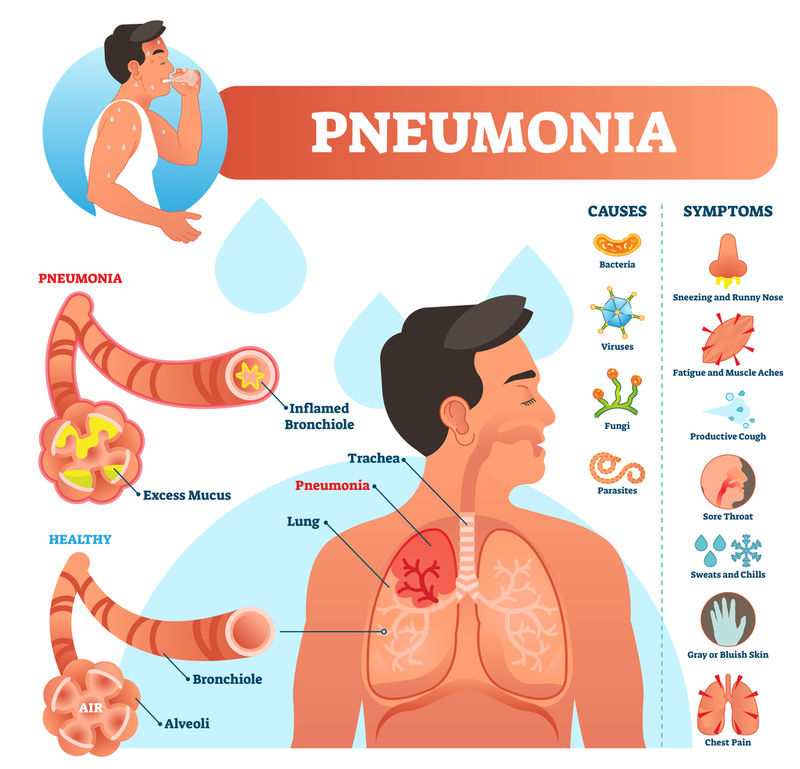
Symptoms of Pneumonia
The symptoms of pneumonia can vary depending on the cause of the infection, the severity, and the individual’s age and overall health. However, the most common symptoms of pneumonia include:
Common Symptoms of Pneumonia:
1. Cough: Persistent cough, often producing mucus or phlegm. The mucus can be green, yellow, or even bloody in some cases.
2. Fever: A high fever is common, especially in bacterial pneumonia, but it can be mild or absent in viral pneumonia.
3. Shortness of Breath: Difficulty breathing or rapid breathing. In severe cases, it may feel like you're not getting enough air.
4. Chest Pain: A sharp or stabbing pain in the chest, which can worsen when coughing or breathing deeply.
5. Fatigue: A general feeling of tiredness or weakness. Pneumonia often causes exhaustion that can last for weeks, even after other symptoms improve.
6. Sweating and Shaking Chills: These are common, particularly with bacterial pneumonia. Chills can occur suddenly and be accompanied by fever.
7. Confusion or Mental Changes: Particularly in older adults, pneumonia can cause confusion, disorientation, or delirium.
8. Nausea, Vomiting, and Diarrhea: These symptoms are more commonly associated with viral pneumonia, but they can also occur in bacterial or aspiration pneumonia.
Symptoms in Specific Populations:
Infants and young children:
Fast or shallow breathing, difficulty feeding, irritability, or grunting while breathing.
Older adults:
In addition to the typical symptoms, older adults may experience confusion, loss of appetite, and mild or absent fever despite having pneumonia.
Pneumonia homeopathy treatment in Chennai.
Frequently Asked questions
1. Who is at risk for developing pneumonia?
High-risk groups include young children, elderly individuals, smokers, those with chronic diseases (like asthma or COPD), and people with weakened immune systems.
2. What is the difference between pneumonia and bronchitis?
Pneumonia involves inflammation of the air sacs in the lungs, while bronchitis primarily affects the bronchial tubes, causing them to swell and produce mucus.
3. What complications can arise from pneumonia?
Complications can include pleuritis (inflammation of the lining around the lungs), lung abscesses, sepsis, and sometimes respiratory failure.
4. Can pneumonia recur?
Yes, individuals can experience recurrent pneumonia, especially if they have underlying health issues or risk factors.
5. Can pneumonia be a serious illness?
Yes, pneumonia can be life-threatening, particularly for young children, elderly individuals, and those with serious underlying health conditions.
6. How do I know if I have pneumonia or just a cold?
While both may involve coughing and fever, pneumonia typically causes more severe symptoms, including shortness of breath, chest pain, and fatigue. If symptoms worsen or are severe, seek medical attention.


